

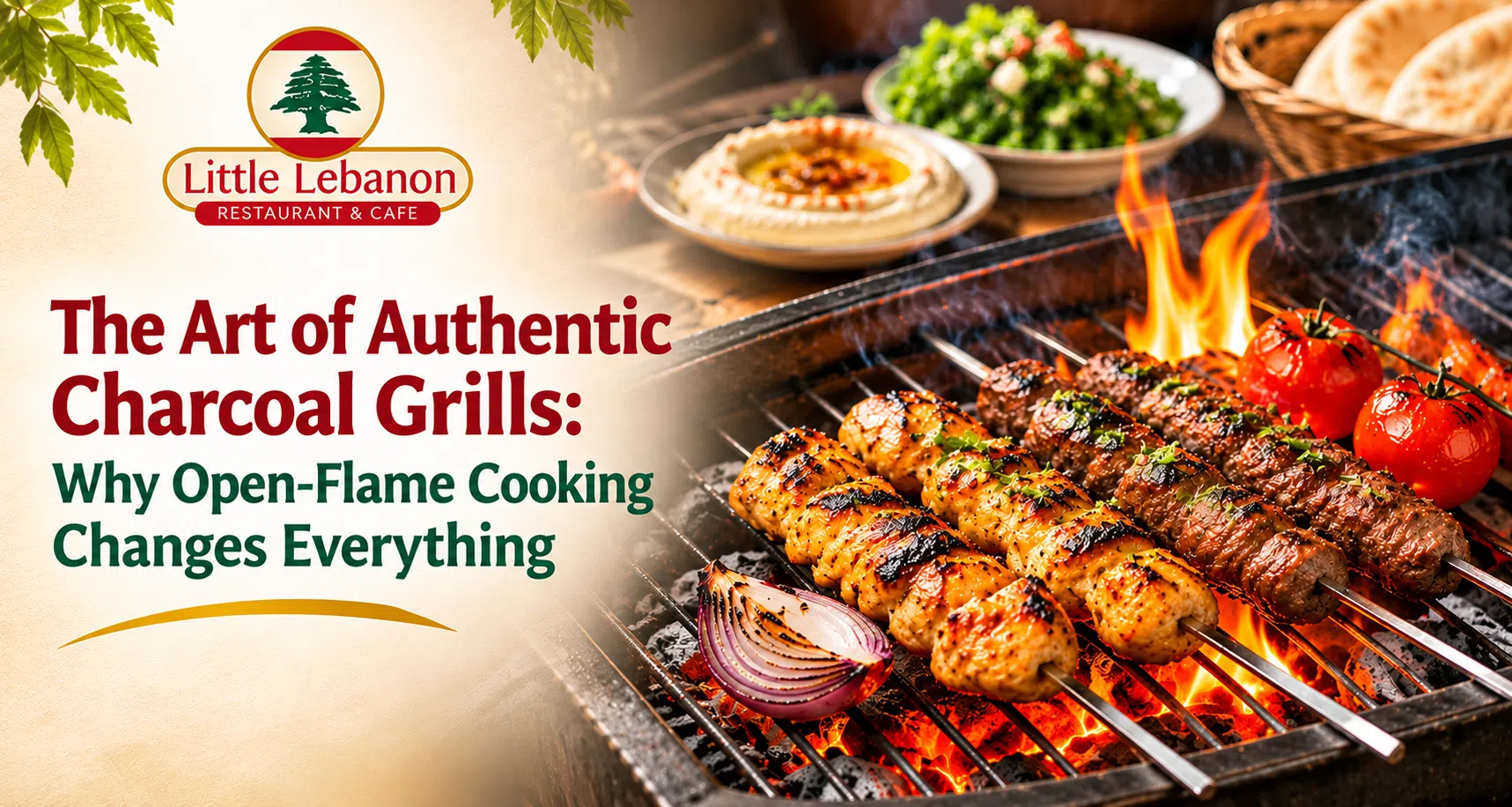
All food lovers have one thing in common: they know when the charcoal grill is lit and that first curl of smoke rises into the air. It has a smoky, slightly sweet fragrance that is impossible to ignore.
At Little Lebanon Restaurant, we built our menu around this exact moment. We focus on that first bite that feels warm, smoky, and bold. We cook the charcoal skewers, kafta, and charcoal chicken to bring out the flavour. You can taste the grill on the outside, but the inside stays juicy. People have been sharing this cooking style in the Middle East for many years. We keep it the same as we started.
Charcoal grills have quietly become one of the most searched cooking styles in Australia, whether people are hunting for a charcoal BBQ at Bunnings for their backyard party, or simply craving the real thing at a charcoal grill restaurant. In this blog, we’re pulling back the curtain on why charcoal cooking hits differently, the techniques that make it special, and a few recipes worth trying at home, or better yet, tasting fresh off our grill.
What Real Charcoal Grilling Actually Looks Like
People often assume charcoal grilling is about throwing meat on hot coals and hoping for the best flavour. In reality, it is a slower, more deliberate craft that relies on reading the fire rather than trying various temperature combinations.
Also, people often take the role charcoal plays for granted. Good smoky grilling starts with the coals themselves. We suggest using good-quality briquettes and natural lump charcoal, and waiting until they burn down; they should be glowing with a light grey ash coating, which is the sweet spot where the heat becomes much steadier.
Remember, the fire is much more flavourful when it’s steady than when it is fierce and unpredictable. After that, it is more about zones: a hot side for searing, a cooler side for slow cooking and constant small adjustments as the fire breathes.
What makes it different from gas or electric cooking is the involvement of natural elements, for instance, real wood smoke, actual embers and airflow that a cook has to manage by experience and awareness.
What Makes Open-Flame Cooking Transform Everything
If you cook on a charcoal grill, open-flame cooking is why it tastes so different from anything cooked on a stovetop. Here, the flame does more than heat the food; it transforms it.
When fat drips on the coals, it vaporises and rises back up through the meat as smoke, layered in flavour that no marinade alone can replicate. That is exactly why a piece of charcoal chicken or a lamb skewer cooked over open flame tastes richer than one pan-fried at home.
Open flame triggers the Maillard reaction much faster than most other cooking methods. This process browns meat exposed to open flame and makes kafta crispy on the surface and soft inside. If done properly, every bite will have a combination of crunchy and tender textures.
Control is an important element of any cooking approach, and in this case it refers to the lack of full control you can achieve with tools such as an oven. Open-flame cooking requires moving the skewers or grate to different places on the cooking surface and cooking food manually, with no help from technology.
Aroma is another issue that shouldn’t be ignored. The open flame creates smoke chemicals in the surrounding air, making the meal smell good long before it’s served. Just walk by any grill restaurant and see how the aroma itself draws customers, and this is no coincidence; this is chemistry working as it should.
Lastly, the open-flame method cooks the food quickly on the surface while retaining moisture inside the meal, especially with thin pieces of meat or skewers. The quick sear prevents meat juices from evaporating slowly.
What Makes a Charcoal Grill Worth Its Salt
Not all charcoal grills perform the same way, and knowing how to choose among them, whether you are purchasing some of the best charcoal grills for your own kitchen at home or just wanting to know more about what happens in a restaurant kitchen, is important.
Steady heat and moving air
A good grill keeps the heat even. It also lets you adjust airflow through vent openings. With the right airflow, the coals burn steadily at the rate you need. If the airflow is poor, you can end up with flare-ups in one spot and weak heat in another. Then the cook has to work around it. You may also burn through more charcoal than you planned.
Strong grates that do not wobble
Pick grates that feel firm and stable. Cast iron and heavy steel hold warmth longer. That helps you get clean sear marks on the food. If the grates are thin, they lose heat fast. That makes it harder to repeat the same results from one cook to the next.
Size and heat zones
Larger grills often include multiple heat zones. You can either use direct heat for quick items like skewers. You can shift food to indirect heat for slow cooks, like lamb shanks. This split setup is common in many pro grills. Some home models stay simpler and don’t create clear zones.
Ash handling and how grease drains
Ash can pile up quickly. Grease can also collect and drip in ways that change the cook. A better grill gives you ways to manage ash and drainage. That can help the taste stay on track. It also lowers risk when the cooking goes on for hours.
Durability of the materials
Charcoal grilling means intense heat, then it repeats again and again. Well-made steel and cast iron can handle those swings. If the build is thin or weak, the grill can wear out sooner. That matters for weekend backyard meals. It also matters for work nights in a restaurant.
These factors make it easier to understand the difference between food cooked over charcoal in a Lebanese restaurant and food prepared quickly in a backyard setting. This is because sometimes it is all about the machine doing its job right.
More Than Just Cooking Meat: The Many Other Ways of Using a Charcoal Grill
While charcoal grills are usually seen as just for meat, their uses are more varied than one might think.
- Grilled vegetables. Capsicums, eggplants and even tomatoes develop a sweet smokiness from being grilled on the coals, something that helps to give signature dishes like baba ghanouj their flavour, where eggplants are grilled in their entirety before blistering the skin off for blending.
- Toasting breads and flatbreads. The heat from the charcoal provides a unique char and crunch to flatbread that is hard to replicate in an oven, adding to dishes served with dips and grilled meats.
- Slow cooking. Placed on indirect heat, the charcoal grill can slowly cook larger cuts like lamb shanks, using time to make them tender and full of rich smoky flavour.
- Reheating dishes. A quick pass over hot coals can revive and add flavour to already cooked food without starting from scratch.
Techniques to Raise Your Open-Flame Game
It’s not an elusive technique but a series of small tricks that will help you master your open-flame cooking. Here are a few of those:
Make a two-zone fire
One half of your grill should be hotter than the other half. Char the meat over the hot side, then finish thick cuts in the cooler zone to avoid burning the surface.
Use oil-rich marinades
Olive oil helps the spices penetrate the meat and protects it from burning over high temperatures; that’s why Lebanese marinade recipes like kafta and chicken taouk always contain olive oil, garlic, and lemon.
Wait till the charcoal turns to ash.
Cover the coals with ash before you start cooking. Cooking too early creates extra smoke and uneven heat, while waiting too long reduces heat.
Turn skewers frequently, but not constantly.
Small, frequent movements ensure even cooking and charring on all sides without burning from excessive movement.
Let meat rest after grilling.
Letting meat rest after grilling helps the juices distribute throughout and makes every bite juicy, rather than dripping out when cut immediately after grilling.
Control flare-ups with fat drainage.
Using skewers that drain fat away from the direct flame helps prevent accidental burning and keeps flavours balanced rather than bitter.
The Recipes That Really Do Deserve to Be Charcoal-Grilled
Some recipes can only be cooked over an open flame, and we serve a few such dishes at Little Lebanon.
Chicken Taouk
Marinated with garlic, lemon, and yogurt, this recipe relies on charcoal to achieve that smoky, slightly charred taste.
Kafta Skewers
Made with beef mince, parsley, onion, and seasoning, the Kafta skewers are quickly grilled over hot charcoal.
Lamb Shanks
Slow-cooked over indirect charcoal heat, these shanks gradually soften as they take on a smoky taste.
Charcoal Chicken
This chicken is grilled whole or half, letting the skin crisp up and absorb the smoke.
If you want to experiment with something new in your home kitchen, try this recipe:
Charcoal-Grilled Garlic and Sumac Prawns
Marinate the prawns in the mixture of olive oil, crushed garlic, sumac, and lemon for about twenty minutes. Skewer the prawns and quickly grill them over hot coals for two to three minutes per side. These prawns are done when they become opaque and have small char marks on their surface.
The Last Word on Cooking Over Fire
Grilling on charcoal is not only a process but also a long-standing tradition built on patience and heat-management skills. It takes patience to watch the meat slowly change colour and smell over the open fire, becoming tender inside, smoky outside, and extremely tasty. At Little Lebanon Restaurant, these traditions are at the heart of our cooking. We prepare all skewers and charcoal chickens, and also offer various takeaway meatboxes and other grilled dishes in authentic Lebanese style. If you crave the authentic taste of charcoal-grilled food from Lebanon, visit Little Lebanon Restaurant or order through our website.
Common Questions Asked About Charcoal Grilling
Both charcoal and gas grills can fit into a healthy diet; however, charcoal grilling uses much less oil because the smoke and heat do the work.
Charcoal smoke comes from the smoke molecules it emits, and it also lets fat evaporate and drip over the coals.
Natural lump charcoal burns hotter and cleaner, but briquettes provide consistent, longer-lasting heat, and some people use both types at once.
Certainly; eggplant, capsicum and tomatoes cook well on a charcoal grill and become an important ingredient in dishes such as baba ghanouj.
Wait for the coals to develop a coating of grey ash, usually taking fifteen to twenty minutes after lighting.
For home use, an efficient grill with controlled air ventilation, grates, and suitable skewers is usually all you need; professional kitchens use sophisticated open-fire cooking equipment.
Little Lebanon’s charcoal grilling traditions follow centuries-old Lebanese recipes and cooking techniques, using an authentic heat source, marinades, and skewers passed down through generations instead of easy alternatives.

[…] menu have its own identity? In Little Lebanon, for instance, you will see dips, salads, entrees, charcoal grills, main courses, seafood, and traditional pastries of only one cuisine. The idea behind this menu is […]